



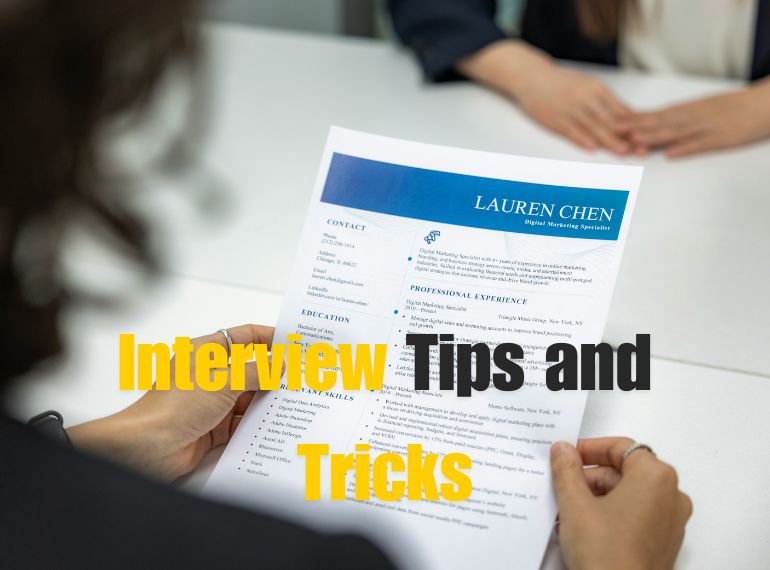
Interviews Tips and Tricks: Job interviews are crucial steps in the job application process, and they can be both exciting and nerve-wracking. Securing an interview is an opportunity to showcase your skills, experiences, and personality to potential employers. Preparation is key to making the most of this chance and stand out among other candidates. In this comprehensive guide, we will share interview tips and tricks to help you ace your interviews and leave a lasting impression on interviewers.
Read about the Company:
Before heading into an interview, conduct a thorough research about the company you’re applying to. Understand their values, mission, products, and recent achievements. This knowledge will demonstrate your genuine interest in the company and help you tailor your responses during the interview.
Job Description:
Familiarize yourself with the job description and requirements for the position. Identify the key skills and qualifications the company is seeking in a candidate. This understanding will allow you to showcase your suitability for the role during the interview.
Practice:
Practice answering common interview questions such as “Tell me about yourself,” “What are your strengths and weaknesses?” and “Why should we hire you?” Rehearsing your responses will boost your confidence and enable you to articulate your thoughts clearly during the interview.
Read more about common interview questions
Show Your Achievements:
Rather than solely focusing on your job responsibilities, highlight your achievements and successes in previous roles. Use specific examples to illustrate your impact and contributions. Quantifying your accomplishments with data can also provide measurable results.
Demonstrate Your Soft Skills:
Employers not only look for technical skills but also value soft skills such as communication, teamwork, adaptability, and problem-solving. Be prepared to provide examples of situations where you effectively demonstrated these skills.
Dress Professionally:
First impressions matter, and dressing professionally shows that you take the interview seriously. Dress appropriately for the industry and company culture to present yourself as a polished and confident candidate.
Arrive Early and Be Punctual:
Arriving early for the interview shows respect for the interviewer’s time and allows you a few moments to collect your thoughts. Aim to be punctual and ready for the interview on time.
Maintain Positive Body Language:
Non-verbal cues play a significant role in interviews. Maintain eye contact, offer a firm handshake, and sit up straight to exude confidence and professionalism. Avoid fidgeting or slouching, as these can convey nervousness.
Prepare Thoughtful Questions:
Toward the end of the interview, the interviewer may ask if you have any questions. Be prepared with thoughtful questions about the company, team dynamics, or future projects. Asking questions shows genuine interest in the role and the company.
Focus on Your Unique Selling Points:
Identify your unique selling points—qualities, skills, or experiences that set you apart from other candidates. Emphasize these points during the interview to showcase the value you can bring to the organization.
Handle Difficult Questions Gracefully:
Interviewers may ask challenging questions to test your ability to handle pressure and think on your feet. Stay composed and answer honestly. If you are unsure about a question, it’s okay to ask for clarification or take a moment to gather your thoughts.
Be Authentic and Genuine:
Interviewers appreciate authenticity. Be yourself during the interview and let your personality shine through. Being genuine allows the interviewer to assess if you are a good fit for their company culture.
Follow Up with a Thank-You Note:
After the interview, sending a thank-you note or email expressing your gratitude for the opportunity to interview can leave a positive lasting impression. Reiterate your interest in the position and appreciation for their time.
Stay Positive, Regardless of the Outcome:
Interview outcomes may vary, and you may not receive an offer for every position you interview for. Regardless of the result, stay positive and view each interview as a learning experience. Use feedback to improve your interview skills for future opportunities.
Prepare for Different Interview Formats:
With the rise of remote work, interviews may be conducted through video conferencing. Prepare for both in-person and virtual interviews, ensuring you have the necessary technology and a quiet, professional setting for video interviews.
Practice with Mock Interviews:
Consider practicing mock interviews with a friend or mentor. Mock interviews allow you to receive feedback on your interview style, identify areas for improvement, and build your confidence for the real interview.
Research Common Interviewers:
If possible, find out the names and roles of the interviewers in advance. Researching their backgrounds can provide insights into their areas of expertise and interests, helping you tailor your responses accordingly.
Address Gaps:
If you have employment gaps on your resume, be prepared to address them positively. Highlight any relevant experiences or activities during the gap that contributed to your personal and professional growth.
Problem-Solving Skills:
Companies often seek candidates who can solve problems and adapt to challenges. Share examples of how you approached difficult situations and successfully resolved them.
Practice Active Listening:
During the interview, listen carefully to the questions asked and respond thoughtfully. Active listening demonstrates your attentiveness and shows respect for the interviewer.
Develop a Strong Elevator Pitch:
Craft a concise and compelling elevator pitch that summarizes your skills, experiences, and career goals in a minute or less. An elevator pitch can be useful during networking events or brief interactions with potential employers.
Salary Negotiations:
If salary negotiations arise during the interview process, handle them professionally and be prepared to justify your salary expectations based on your skills, experience, and market value.
Send a Thank-You Note:
If the interview process includes multiple rounds with different interviewers, send a thank-you note to each one after their respective interviews. Tailor the message to reference specific points discussed during each interview.
Are you looking for a job click here.
Conclusion:
Interviews are opportunities to demonstrate your qualifications, skills, and personality to potential employers. With proper preparation, a positive attitude, and effective communication, you can stand out as the ideal candidate. Research the company, practice common interview questions, and showcase your achievements and soft skills.
Pay attention to your body language, dress professionally, and arrive on time. Be authentic, ask thoughtful questions, and handle difficult questions gracefully. Follow up with a thank-you note, practice with mock interviews, and prepare for different interview formats. Remember to stay positive, regardless of the outcome, and use each interview as a learning experience. By implementing these expert tips and tricks, you can approach interviews with confidence and increase your chances of securing your dream job. Good luck on your journey to interview success!